
Even if you brush and floss daily and maintain your braces during your orthodontic treatment, it is still important to visit your local dentist every 6 months or as recommended.
Why?
*Your dentist can detect and treat tooth and gum problems that you may have never felt or noticed.
*Even proper daily oral hygiene may not be enough to prevent cavities and gum problems.
*Frequent visits can allow your dentist to detect a problem early and prevent future complications.
During an oral examination, your dentist can check the health of your teeth, gums, cheeks, and tongue and do a thorough cleaning and polishing of the teeth. If you have not visited a dentist in the past 6 months, Dr. Souris would be happy to provide some great references in the area! Feel free to contact our offica at 440-734-1146.
Thursday, February 9, 2012

Monday, December 5, 2011
When is it time to begin orthodontic treatment?
 The American Association of Orthodontists recommends that a child be evaluated by an orthodontist by age 7. However, you are never too old for treatment! Here are some early warning signs for children and adults indicating it's time to check in with us:
1. Early or late loss of baby teeth
2. Difficulty with chewing or biting
3. Mouth breathing
4. Finger or thumb sucking
5. Crowding, misplaced, or blocked out teeth
6. Jaws that exhibit a big overbite or underbite
7. Speech difficulty
8. Biting the cheek or the roof of the mouth
9. Protruding teeth
10. Teeth that meet in an abnormal way or don't meet at all
11. Facial imbalance or asymmetry
12. Grinding or clenching of teeth
Do any of these warning signs fit you or your child? If so, please give Dr. Souris a call to schedule a free consultation at 440-734-1146.
Monday, November 14, 2011
Cold and Flu Season is Upon Us!

Cold and flu season is here! The Center for Disease Control and Prevention states that a common cold and its symptoms can last up to two weeks. To promote a healthy and clean environment, Dr. Souris and his staff give a great deal of attention to sanitation and sterilization in both offices at all times. They follow all requirements for sterilizing instruments and work surfaces for the protection of their patients as well as themselves. They always ask that their patients reschedule their appointments if they have any type of cold or illness that can infect others. Remember, constantly wash your hands and avoid contact with those who are ill. Stay Healthy!
Thursday, October 27, 2011
Halloween Safety Tips

In the spirit of Halloween, Dr. Souris and his staff would like to remind all of their patients to be safe while celebrating with friends and family. The American Association of Orthodontists has provided trick-or-treaters with some tips for a ghoulishly good time:
* Young children should always be accompanied by an adult
*Carry a flashlight
* Wear a light colored or reflective costume (at least some part of it)
* Have an adult inspect all treats before the children dig in
Many treats can casue real problems for those of you going through orthodontic treatment. Remember to avoid really crunchy and gummy things when picking your candy (ex: choose chocolate with no nuts). We wish you all a happy, safe, and spooky Halloween!
Thursday, October 6, 2011
October is National Orthodontic Health Month!

Can you believe October is already here! October happens to be National Orthodontic Health Month, and the event is organized by the American Association Of Orthodontists (AAO). It is meant to raise awareness of the importance of proper oral health through the orthodontic correction of tooth &/or jaw problems. We truly enjoy creating fantastic smiles that improve people's dental health and give them increased self-confidence and a big reason to smile! As we approach Halloween, however, there are many treats that can cause damage to braces and extend your treatment time. The AAO recommends patients avoid the following Halloween treats or recipes with these ingredients:
* Caramel
*Nuts
*Popcorn
*Taffy
*Jelly Beans
*Hard Pretzels
*Licorice
*Bubblegum
*Chips
*Ice
For those of you still thinking about braces, please feel free to contact Dr. Souris at 440-374-1146 or visit us at our website- http://www.bracesbysouris.com/!
* Caramel
*Nuts
*Popcorn
*Taffy
*Jelly Beans
*Hard Pretzels
*Licorice
*Bubblegum
*Chips
*Ice
For those of you still thinking about braces, please feel free to contact Dr. Souris at 440-374-1146 or visit us at our website- http://www.bracesbysouris.com/!
Thursday, September 8, 2011
Keeping your mouth healthy with Braces by Souris!

We know that maintaining good dental health requires only a few minutes a day! We thought we would offer some practical advice on how to keep your child's mouth clean and healthy between visits with Dr. Souris.
First and most importantly, you need to brush your teeth after every meal and snack. The braces provide many hidden areas for the food to collect since what you eat and drink does not wash away as easy as it does on a smooth tooth surface. More care and time are needed to adequately brush your teeth with braces in order to prevent plaque build-up and possible gum disease (two minutes is a good brushing time to shoot for). Proper brushing techniques are an essential part of maintaining good oral health during your orthodontic treatment. Flossing daily will also prevent plaque build-up between your teeth. Mechanical toothbrushes, water pics, and mouth rinses can certainly help, but effective and consistent brushing and flossing are the most important ingredients to a healthy smile during treatment. If you feel you need help, please don't hesitate to ask us for a review on proper methods of brushing and flossing at your next visit. Lastly, we encourage you to throw away old toothbrushes and replace them every 2 or 3 months or after an illness.
We hope this helps emphasize the importance of proper oral hygiene during orthodontic treatment. If you have any additional questions, please feel free to contact us at 440-734-1146.
Thursday, September 1, 2011
What can Invisalign do for my oral health?

When considering treatment, patients often ask us how Invsalign differs from traditional braces. Invisalign involves a series of removable aligners (retainers) that are not only clear and comfortable, but they can also help you with your oral health during and after treatment:
Healthy Gums: Straight teeth allow for better oral hygiene and thus can lessen the chance of plaque build up with red and swollen gums which can lead to gum disease.
Easy Cleaning: Invisalign is removable, therefore brushing and flossing is easier and you are able to maintain a healthy mouth. This will help avoid any tooth or gum problems that may develop during treatment due to poor oral hygiene.
Improved speech and chewing: Invisalign allows for easier adaptation to the treatment, since each aligner is snuggly fitted to the teeth. This helps minmize speech difficulties and allows for easier adjustment of the lips and cheeks with minimal discomfort.
If you have any questions about Invisalign, please feel free to contact Dr. Souris at 440-734-1146 and schedule a free consultation!
Tuesday, August 9, 2011
The Most Important Cholesterol Reading You're Not Getting- By Arthur Aqatston, MD
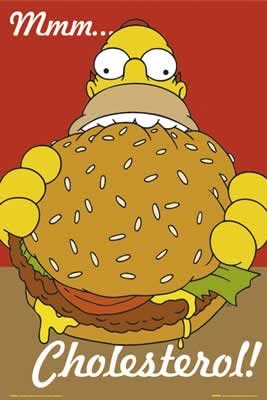
Here is a little informational article I found very interesting about cholesterol that I would like to share with you! There's a dilemma that has often puzzled doctors: Roughly half the people who have heart attacks have perfectly normal cholesterol levels. Patients with cholesterol levels well below the recommended level of 200 have often experienced heart attacks at a relatively young age while people with levels of 300 or higher have exhibited no plaque in their coronary arteries at a much older age. How could this be?
Doctors now have at least a partial explanation. While we've all been focusing on our total cholesterol numbers, it turns out that the size of the cholesterol particles is equally important. Excess LDL ("bad" cholesterol) ends up getting deposited in arterial walls and forming plaque, which causes arteries to stiffen, blood pressure to rise, and ultimately leads to heart attacks. However, not all LDL particles are equally likely to do damage. If they are very small, they are like darts that easily pierce and stick to the arterial lining resulting in the deposit of plaque. If they are large in size, they harmlessly bounce off the arterial walls like beach balls.
Most of us check our cholesterol levels every year, but very few of us get tested for particle size, even though the tests have been widely available in the past five years. So next time you're in the doctor's office checking your cholesterol, ask if it would be beneficial to you to have that additional test done! They're graded in different ways, but most tell you if your particle size is small, medium, or large. The healthier your diet and exercise, the more your LDL particles will resemble those beach balls. As your waist shrinks, your particle size will grow. When it comes to LDL, big is beautiful!
Sunday, July 24, 2011
Stay Cool with a Braces-Friendly Summer Treat!

Summer is in full bloom, and what's better on a hot hazy day than a delicious treat that will cool you down! Luckily we have discovered just the thing, Watermelon Sorbet! Here is the complete recipe:
Watermelon Sorbet
Ingredients
* 3/4 cup water
*1/4 cup sugar
* 1 teaspoon lime juice
*2-3 cups watermelon, diced, no seeds or rind
Directions
In a small saucepan, heat the water, sugar, and lime juice on medium heat for 1 to 2 minutes, stirring until the sugar has dissolved. Chill this syrup for at least 20 minutes. In the meantime, place the watermelon chunks in a food processor or blender and liquify them. Add the chilled syrup to the watermelon puree and blend. Freeze sorbet. Serve and enjoy!
Happy Summer!
Thursday, June 23, 2011
You're Never Too Old to Treat Yourself to a New Smile!

Did you know that one in every five orthodontic patients is an adult? We're living longer and technology is improving, making orthodontic treatment an appealing and safe option for patients of all ages. As the trend toward treatment later in life grows, we're seeing braces on parents as well as children- and even celebrities such as Ton Cruise, Gwen Stefani, and Nicholas Cage have shown off their braces. It's never too late to look and feel your best!
Can braces Work for Adults?
People of all ages can benefit from orthodontic treatment. The physical process of moving teeth is the same, young or old, which means it's never too late to address issues such as overbites, crooked teeth, or jaw problems.
How Do I Get Started?
If you're considering orthodontic treatment, you can set up a free consultation with Dr. Souris. At that time he will do a thorough examination, discuss treatment options with you, and answer any questions you may have. We will also discuss the fee, any insurance benefits, and all your financing options.
What Are the Benefits?
Straightening your teeth can improve your smile, your self-esteeem, and your dental health. There are many advancements in treatment, including clear braces and Invisalign, that make it easier to identify the option that best fits your lifestyle. The newer braces are more effective, more comfortable, and much less noticeable.
If you think you might benefit from orthodontic treatment, give us a call at 440-734-1146 and set up a free consultation to determine what type of treatment best meets your needs.
Tuesday, June 7, 2011
All the Cool Kids are Doing it!
 Braces today are cool and can even be fun! These were among the findings of a recent nationwide survey of moms whose children are going through or have had orthodontic treatment. New technologies such as Invisalign, advanced computer software, color options, and even popular celebrities- Tom Cruise, Dakota Fanning, Danny Glovber, Serena Williams- sporting stylish braces are making orthodontic treatment more comfortable, more fashionable, and even cool for today's teens.
The study, conducted by the American Association of Orthodontists, found that 86% of moms reported that braces are cooler today than when they were children. Also, 69% of moms said wearing braces makes their children feel cool, and 81% reported their children's experience with orthodontic treatment as either positive or extremely positive.
Different color options and the ability to change colors provides an exciting way for young patients to customize their appearance and helps them feel good about their experience with braces leading to better cooperation and a better result.
If you would like to learn more about all the new exciting options for braces, please feel free to contact Dr. Souris at 440-734-1146 and set up a free consultation.
Wednesday, May 25, 2011
What's So Bad About Nail Biting?

We've all heard that nail biting is an awful habit, so we took the time to review an interesting article that discusses how biting your nails affects your teeth and your oral health.
Nail biting, also known as Onychophagia, is a common habit amoung various age groups including children, teens, and young adults. Nail biting is generally triggered by stress. That being said, it is unsanitary, unattractive, and unhealthy for your teeth. Here's why:
*It's unsanitary. Your nails are twice as dirty as your fingers! Hence, they are a big source of unwanted germs and bacteria.
*It can have unhealthy effects on your teeth. Nail biting causes you to constantly chew with your teeth, and this excessive motion can wear your front teeth faster and cause unwanted movement of your teeth due to the constant pressure.
*Braces don't love it either. Nail biting can damage the appliances and put unnecessary pressure on your teeth beyond what the braces are already applying, resulting in increased discomfort and stressing of the roots.
*Finally, it can be costly. Nail biting can result in up to $4,000 in additional dental bills over one's lifetime according to the Academy of General Dentistry.
Now is a good time to think about breaking your habit and helping with the long term health of your teeth. If you have any additional questions about your teeth, please feel free to contact Dr. Souris at 440-734-1146.
Nail biting, also known as Onychophagia, is a common habit amoung various age groups including children, teens, and young adults. Nail biting is generally triggered by stress. That being said, it is unsanitary, unattractive, and unhealthy for your teeth. Here's why:
*It's unsanitary. Your nails are twice as dirty as your fingers! Hence, they are a big source of unwanted germs and bacteria.
*It can have unhealthy effects on your teeth. Nail biting causes you to constantly chew with your teeth, and this excessive motion can wear your front teeth faster and cause unwanted movement of your teeth due to the constant pressure.
*Braces don't love it either. Nail biting can damage the appliances and put unnecessary pressure on your teeth beyond what the braces are already applying, resulting in increased discomfort and stressing of the roots.
*Finally, it can be costly. Nail biting can result in up to $4,000 in additional dental bills over one's lifetime according to the Academy of General Dentistry.
Now is a good time to think about breaking your habit and helping with the long term health of your teeth. If you have any additional questions about your teeth, please feel free to contact Dr. Souris at 440-734-1146.
Thursday, May 12, 2011
Myths and Facts About Orthodontics

Trust us when we say we know there are quite a few myths about braces floating around these days. Before you buy into these myths, we think you should get the facts! The American Association of Orthodontists has provided useful information that sheds light on some of these myths:
1. Myth: Orthodontists are appropriate only for the most challenging and complex cases.
Fact: As specialists, orthodontists have the additional education and expertise to recognize the difference between a simple case and a complex one and therefore how to better treat it.
2. Myth: Braces are for kids.
Fact: One in five orthodontic patients is an adult.
3. Myth: If there was a giant magnet and someone flipped a switch, people would fly out of their chairs and stick to the magnet.
Fact: Braces are made from non-magnetic materials.
4. Myth: Orthodontists charge more than general dentists for treatment.
Fact: Fees vary from practice to practice. Each doctor, whether an orthodontist or general dentist, sets his/her own fee schedule. The value in seeing an orthodontist comes from the additional education they receive to become specialists, and the knowledge and expertise they have in treating only orthodontic patients.
5. Myth: Braces are painful and take two years or more for the desired result.
Fact: After the initial adjustment period, like breaking in a new pair of shoes, braces become comfortable. In addition, they are sometimes only needed for months and not years.
6. Myth: Signals from braces link to the internet to download songs onto an iPod.
Fact: This is not possible YET!
7. Myth: Braces are ugly, call attention to themselves, and can be embarrassing.
Fact: Today's braces can be clear (tooth colored), nearly invisible (like clear plastic retainers), or even stuck to the back of the front teeth. Appearance should really not be a reason to avoid getting braces.
Please contact Dr. Souris if you have any additonal questions about braces and orthodontists by calling us for a free consulatation at 440-734-1146. We would be happy to evaluate you or your child for the different treatment options that are available.
Tuesday, April 19, 2011
Tricky Nutrition Questions Answered- Part 7- What's the Best Junk Food?

If my options are a cheesburger, a hot dog, or a slice of pizza, which should I eat? There's a lot of room for debate about these American staples, since hundreds of varieties exist. It comes down to your choice of toppings. The more high fiber veggies you can include, the better. For that reason, your best option is probably a slice of pizza loaded with a combo of veggies like bell peppers, broccoli, and other greens. It's not the perfect meal ( the carbs in the crust are probably of the refined variety), but the pile of produce on the top at least makes it a healthier choice.
Sunday, April 10, 2011
Tricky Nutrition Questions Answered- Part 6- What's the Best Fruit Source?

Is a glass of fruit juice equivalent in nutrition to a piece of fruit? Not even close. Most prepared fruit juices contain not only natural sugar but large amounts of added sugar to cut the tartness of the drink. Even juices labeled 100 percent pure aren't necessarily made exclusively from the advertised juice. Superfoods like pomegranate and blueberry are often on the front of the container, but a closer look at the ingredient list reveals that pear, apple, and grape juices- cheaper to produce and supersweet- are usually among the included ingredients. To avoid a sugar surge, pick single fruit juices, pour half a glass, and fill the rest with water or seltzer. Even better, stick with whole fruit. A medium orange has just 62 calories, 12 grams of sugar, and 3 grams of fiber compared with the 110 calories, 24 grams of sugar, and zero fiber found in an 8 ounce glass of orange juice.
Friday, April 1, 2011
Tricky Nutrition Questions Answered- Part 5- Is There a Nutritional Difference Among Cheeses?

Are white cheeses better than yellow cheeses? When it comes to weight loss, yes. Yellow cheeses tend to have more calories because of their higher fat content. Cheddar has 113 calories and 9 grams of fat per ounce, whereas Brie comes with 94 calories and 8 grams of fat. Either way, though, all cheeses are calorie-dense foods. One ounce, which is roughly the size of four dice, has about 100 calories, which is more than twice as many as you'll find in the same size serving of salmon. So remember to use portion control.
Monday, March 21, 2011
Tricky Questions Answered- Part 4- Are All Proteins Created Equal?

Not really. While many plant foods, including nuts and beans, can provide a good dose of protein, the best sources are dairy products, eggs, lean meat, and fish according to Donald Layman, PhD and professor emeritus of nutrition at the University of Illinois. Unlike plant based proteins, animal protein is complete, meaning it contains the right amounts of the essential amino acids your body can't synthesize on its own. It is possible to meet complete protein needs with plant based foods by combining legumes, nuts, and grains, but you need to consume 20 to 25 percent more to reep the same benefits that animal derived sources would provide, says Mark Tarnopolsky, MD, PhD, who studies nutrition at McMaster University in Toronto.
Saturday, March 5, 2011
Tricky Questions Answered- Part 3- Which Rice is Healthier?

Is brown rice really much healthier than white? Yes, and that includes all grains and breads. If you eat the carbs with the grain ( the label says "whole wheat") it will be full of fiber because it is made from the entire wheat kernel. Fiber takes up room in your stomach and sends a signal to your brain that you're full. But if the fiber is taken out, as is the case with refined carbs such as white rice and bread, fast-rising blood sugar triggers your pancreas to release a flood of insulin which not only lowers blood sugar, but also signals your body to store fat. A study from Penn State University compared how much belly fat people lost when they ate whole grains instead of refined grains, and the results were significant. The whole grain eaters lost 2.4 times more fat.
By avoiding refined foods, you also avoid foods that are high on the glycemic index, the scale that gauges the degree to which carbohydrates increase the level of sugar in the blood. Dining at regular intervals, eating some protein and fat at every meal, and choosing whole grains such as whole wheat breads and pastas will help manage your blood sugar level, your cravings, and your fat storage.
Friday, February 25, 2011
Tricky Nutrition Questions Answered- Part 2- What's A Healthy Energy Booster?

Coffee. The caffeine in one cup of black coffee should get you about 5 hours (give or take) of alertness. Researchers have found that coffee is packed with antioxidants, and studies have shown that it enhances short-term memory and helps protect against dementia and cancer. The jolt you feel from an energy drink comes mostly from sugar, which, aside from adding calories, sets you up for an inevitable crash.
Sunday, February 20, 2011
Tricky Nutrition Questions Answered- Part 1- Is chicken a better choice than beef?

I ran across a very interesting article on food selection in MSN health written by Joel Weber in Women's Health magazine that I would like to summarize for you in several parts covering different topics.
Is chicken really a better choice than beef? Not always, depending on how the chicken or cow was raised. Organic-fed, pasture raised chicken without the skin is very healthy, but most of us don't eat chickens that are grass fed. Today's non-organic chicken is raised in a way that promotes fat growth. The average piece of chicken has 266 percent more fat than it did in 1971, and the protein content has dropped by one third, according to the researchers at the Institute of Brain Chemistry and Human Nutrition at London Metropolitan University.
In addition, many cows are fed unlimited supplies of corn to fatten them up as quickly as possible. Grass-fed beef has a different taste than conventional beef and has 16 percent fewer calories, 27 percent less fat, 10 percent more protein, and a healthier balance of omega-3 to omega-6 fatty acids. The better choice really depends on the quality of the cut you get, not the kind of meat it is.
Looking forward to sharing the next tricky nutrition question with you next week!
Subscribe to:
Posts (Atom)


