Monday, December 5, 2011

When is it time to begin orthodontic treatment?

The American Association of Orthodontists recommends that a child be evaluated by an orthodontist by age 7. However, you are never too old for treatment! Here are some early warning signs for children and adults indicating it's time to check in with us:


1. Early or late loss of baby teeth


2. Difficulty with chewing or biting


3. Mouth breathing


4. Finger or thumb sucking


5. Crowding, misplaced, or blocked out teeth


6. Jaws that exhibit a big overbite or underbite


7. Speech difficulty


8. Biting the cheek or the roof of the mouth


9. Protruding teeth


10. Teeth that meet in an abnormal way or don't meet at all


11. Facial imbalance or asymmetry


12. Grinding or clenching of teeth


Do any of these warning signs fit you or your child? If so, please give Dr. Souris a call to schedule a free consultation at 440-734-1146.

Monday, November 14, 2011

Cold and Flu Season is Upon Us!


Cold and flu season is here! The Center for Disease Control and Prevention states that a common cold and its symptoms can last up to two weeks. To promote a healthy and clean environment, Dr. Souris and his staff give a great deal of attention to sanitation and sterilization in both offices at all times. They follow all requirements for sterilizing instruments and work surfaces for the protection of their patients as well as themselves. They always ask that their patients reschedule their appointments if they have any type of cold or illness that can infect others. Remember, constantly wash your hands and avoid contact with those who are ill. Stay Healthy!

Thursday, October 27, 2011

Halloween Safety Tips


In the spirit of Halloween, Dr. Souris and his staff would like to remind all of their patients to be safe while celebrating with friends and family. The American Association of Orthodontists has provided trick-or-treaters with some tips for a ghoulishly good time:

* Young children should always be accompanied by an adult


*Carry a flashlight

* Wear a light colored or reflective costume (at least some part of it)

* Have an adult inspect all treats before the children dig in


Many treats can casue real problems for those of you going through orthodontic treatment. Remember to avoid really crunchy and gummy things when picking your candy (ex: choose chocolate with no nuts). We wish you all a happy, safe, and spooky Halloween!

Thursday, October 6, 2011

October is National Orthodontic Health Month!


Can you believe October is already here! October happens to be National Orthodontic Health Month, and the event is organized by the American Association Of Orthodontists (AAO). It is meant to raise awareness of the importance of proper oral health through the orthodontic correction of tooth &/or jaw problems. We truly enjoy creating fantastic smiles that improve people's dental health and give them increased self-confidence and a big reason to smile! As we approach Halloween, however, there are many treats that can cause damage to braces and extend your treatment time. The AAO recommends patients avoid the following Halloween treats or recipes with these ingredients:

* Caramel
*Nuts
*Popcorn
*Taffy
*Jelly Beans
*Hard Pretzels
*Licorice
*Bubblegum
*Chips
*Ice

For those of you still thinking about braces, please feel free to contact Dr. Souris at 440-374-1146 or visit us at our website- http://www.bracesbysouris.com/!

Thursday, September 8, 2011

Keeping your mouth healthy with Braces by Souris!


We know that maintaining good dental health requires only a few minutes a day! We thought we would offer some practical advice on how to keep your child's mouth clean and healthy between visits with Dr. Souris.


First and most importantly, you need to brush your teeth after every meal and snack. The braces provide many hidden areas for the food to collect since what you eat and drink does not wash away as easy as it does on a smooth tooth surface. More care and time are needed to adequately brush your teeth with braces in order to prevent plaque build-up and possible gum disease (two minutes is a good brushing time to shoot for). Proper brushing techniques are an essential part of maintaining good oral health during your orthodontic treatment. Flossing daily will also prevent plaque build-up between your teeth. Mechanical toothbrushes, water pics, and mouth rinses can certainly help, but effective and consistent brushing and flossing are the most important ingredients to a healthy smile during treatment. If you feel you need help, please don't hesitate to ask us for a review on proper methods of brushing and flossing at your next visit. Lastly, we encourage you to throw away old toothbrushes and replace them every 2 or 3 months or after an illness.


We hope this helps emphasize the importance of proper oral hygiene during orthodontic treatment. If you have any additional questions, please feel free to contact us at 440-734-1146.

Thursday, September 1, 2011

What can Invisalign do for my oral health?


When considering treatment, patients often ask us how Invsalign differs from traditional braces. Invisalign involves a series of removable aligners (retainers) that are not only clear and comfortable, but they can also help you with your oral health during and after treatment:


Healthy Gums: Straight teeth allow for better oral hygiene and thus can lessen the chance of plaque build up with red and swollen gums which can lead to gum disease.


Easy Cleaning: Invisalign is removable, therefore brushing and flossing is easier and you are able to maintain a healthy mouth. This will help avoid any tooth or gum problems that may develop during treatment due to poor oral hygiene.


Improved speech and chewing: Invisalign allows for easier adaptation to the treatment, since each aligner is snuggly fitted to the teeth. This helps minmize speech difficulties and allows for easier adjustment of the lips and cheeks with minimal discomfort.


If you have any questions about Invisalign, please feel free to contact Dr. Souris at 440-734-1146 and schedule a free consultation!


Tuesday, August 9, 2011

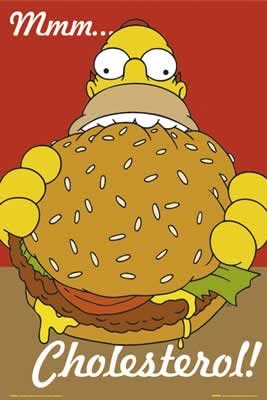
The Most Important Cholesterol Reading You're Not Getting- By Arthur Aqatston, MD


Here is a little informational article I found very interesting about cholesterol that I would like to share with you! There's a dilemma that has often puzzled doctors: Roughly half the people who have heart attacks have perfectly normal cholesterol levels. Patients with cholesterol levels well below the recommended level of 200 have often experienced heart attacks at a relatively young age while people with levels of 300 or higher have exhibited no plaque in their coronary arteries at a much older age. How could this be?

Doctors now have at least a partial explanation. While we've all been focusing on our total cholesterol numbers, it turns out that the size of the cholesterol particles is equally important. Excess LDL ("bad" cholesterol) ends up getting deposited in arterial walls and forming plaque, which causes arteries to stiffen, blood pressure to rise, and ultimately leads to heart attacks. However, not all LDL particles are equally likely to do damage. If they are very small, they are like darts that easily pierce and stick to the arterial lining resulting in the deposit of plaque. If they are large in size, they harmlessly bounce off the arterial walls like beach balls.


Most of us check our cholesterol levels every year, but very few of us get tested for particle size, even though the tests have been widely available in the past five years. So next time you're in the doctor's office checking your cholesterol, ask if it would be beneficial to you to have that additional test done! They're graded in different ways, but most tell you if your particle size is small, medium, or large. The healthier your diet and exercise, the more your LDL particles will resemble those beach balls. As your waist shrinks, your particle size will grow. When it comes to LDL, big is beautiful!